
If you’re curious about CCF Tea Benefits, you may be struggling with bloating, gas, sluggish digestion, acid reflux, or irregular elimination. Digestive discomfort is one of the most common health complaints today—especially for busy people managing stress, irregular meals, and inflammatory foods.
In Ayurveda, CCF tea is a trusted remedy for restoring digestive balance. This gentle, traditional Ayurvedic digestive tea—made from cumin, coriander, and fennel seeds—helps relieve bloating, reduce gas, calm excess digestive heat, and gently strengthen metabolism without overstimulation.
In this article, you’ll discover the key CCF Tea Benefits, how it works in Ayurveda, and how to easily prepare it at home.
What Is CCF Tea in Ayurveda?
CCF Tea stands for Cumin, Coriander, and Fennel tea. These three warming, aromatic spices are staples in Ayurvedic cooking and herbal medicine, particularly for supporting digestion (known as agni, or digestive fire—the force responsible not only for digestion, but for our overall metabolism and ability to transform food into energy).
Unlike harsh detox teas or laxatives, CCF tea works gently and consistently, making it safe for daily use and suitable for most body types.
CCF Tea Benefits in Ayurveda: Why Cumin, Coriander & Fennel Work So Well
1. Relieves Bloating and Gas by Regulating Vata in the Gut
Bloating and gas are often signs of excess Vata dosha, which governs movement in the body—including digestion and elimination. When meals are rushed, eaten on the go, or consumed while stressed, digestion becomes irregular and air accumulates in the system—leading to distention, discomfort, and unpredictable elimination.
-
Helps disperse trapped gas and reduce abdominal distention
-
Calms irregular digestive movement rather than forcing elimination
-
Supports smoother, more predictable digestion after meals
From an Ayurvedic perspective, CCF tea works by gently warming and grounding the digestive tract. Cumin kindles digestive fire, fennel relaxes intestinal tension, and coriander prevents excess heat (which causes burning indigestion and acid reflux), making this tea especially effective for people who have difficulty digesting their food even when eating “healthy” foods.
2. Supports Regular Bowel Movements by Strengthening Agni
Constipation in Ayurveda is rarely viewed as a fiber problem alone. It is often a sign of weak or irregular agni—our digestive and metabolic fire responsible for breaking down food, absorbing nutrients, and eliminating waste.
-
Encourages natural peristalsis without harsh laxatives
-
Helps soften stool by improving digestion upstream
-
Supports daily elimination when taken consistently
CCF tea strengthens digestion at its source rather than stimulating the bowels directly, making it a sustainable solution for chronic constipation, incomplete elimination, or alternating constipation and loose stools.
3. Improves Overall Gut Health by Preventing Ama Buildup
In Ayurveda, many chronic health issues begin with the accumulation of ama, or undigested metabolic waste that the body cannot properly process or eliminate. Ama forms when food is not fully digested and begins to ferment in the gut, leading to fatigue, brain fog, skin issues, and food sensitivities.
-
Supports efficient digestion and nutrient absorption
-
Reduces fermentation and heaviness after meals
-
Helps prevent long-term digestive imbalances
By supporting agni daily, CCF tea helps stop digestive issues before they become chronic or systemic.
4. Reduces Water Retention and Inflammation by Supporting Fluid Metabolism
Water retention and low-grade inflammation are often signs of aggravated Kapha dosha, especially when digestion is too sluggish to properly metabolize fluids. This becomes especially relevant during Kapha season—late winter and spring—when dampness accumulates and many people experience seasonal allergies, sinus congestion, water retention, and general heaviness.
-
Encourages healthy fluid movement and elimination
-
Reduces puffiness and digestive heaviness
-
Supports a lighter, more balanced feeling after meals
Coriander and fennel help regulate fluid balance and calm inflammation, while cumin improves metabolic efficiency. Together, these spices help the body release excess water and reduce stagnation without being overly drying or depleting.
5. Balances Digestion for All Doshas Without Overheating or Overstimulating
CCF tea is tridoshic, meaning it supports Vata, Pitta, and Kapha when prepared properly:
-
Calms Vata without suppressing digestion
-
Supports Pitta without increasing heat or acidity
-
Stimulates Kapha without being harsh or drying
This balance makes CCF tea suitable for daily use across seasons and life stages, especially for people looking for gentle, consistent digestive support rather than quick fixes.
How Cumin, Coriander, and Fennel Support Digestion
Cumin: Ignites Digestive Fire
-
Stimulates digestive enzymes
-
Reduces heaviness and sluggishness
-
Improves metabolism
Coriander: Cools and Soothes
-
Reduces acidity and inflammation
-
Supports liver function
-
Calms irritation in the gut lining
Fennel: Relieves Gas and Cramping
-
Reduces gas and spasms
-
Eases cramping
-
Improves taste and drinkability
Together, these three spices create a balanced digestive tea that supports digestion without overheating or irritating the system.
How to Use CCF Tea for Bloating, Gas, and Sluggish Digestion
For best results, sip CCF tea warm between meals to gently stimulate digestion without diluting digestive enzymes. It’s especially helpful after heavier meals or when you feel bloated or sluggish. During seasonal transitions, particularly in spring when Kapha qualities accumulate, daily CCF tea can prevent bloating, water retention, and digestive stagnation. It’s also a perfect travel companion, as irregular schedules, unfamiliar foods, and stress can disrupt agni. A thermos of warm CCF tea can provide steady digestive support wherever you are.
Frequently Asked Questions About CCF Tea
Is CCF tea safe to drink daily?
Yes. CCF tea is gentle and traditionally used daily to support digestion.
Can CCF tea help with constipation?
Yes. By strengthening agni (digestive metabolism), CCF tea supports regular elimination without harsh stimulation.
When should I drink CCF tea?
Between meals or after eating, especially if feeling bloated or sluggish.
How to Make CCF Tea at Home
Ingredients:
-
½ teaspoon cumin seeds
-
½ teaspoon coriander seeds
-
½ teaspoon fennel seeds
-
2 cups water
Instructions:
-
Add all three seeds to a small pot.
-
Bring water to a boil.
-
Reduce heat and simmer for 5–10 minutes.
-
Strain and sip warm.
How to Drink It:
-
Best taken between meals or after eating
-
Can be consumed 1–3 times daily
-
Avoid drinking ice cold for maximum benefit
Prefer a Ready-Made CCF Tea Blend?
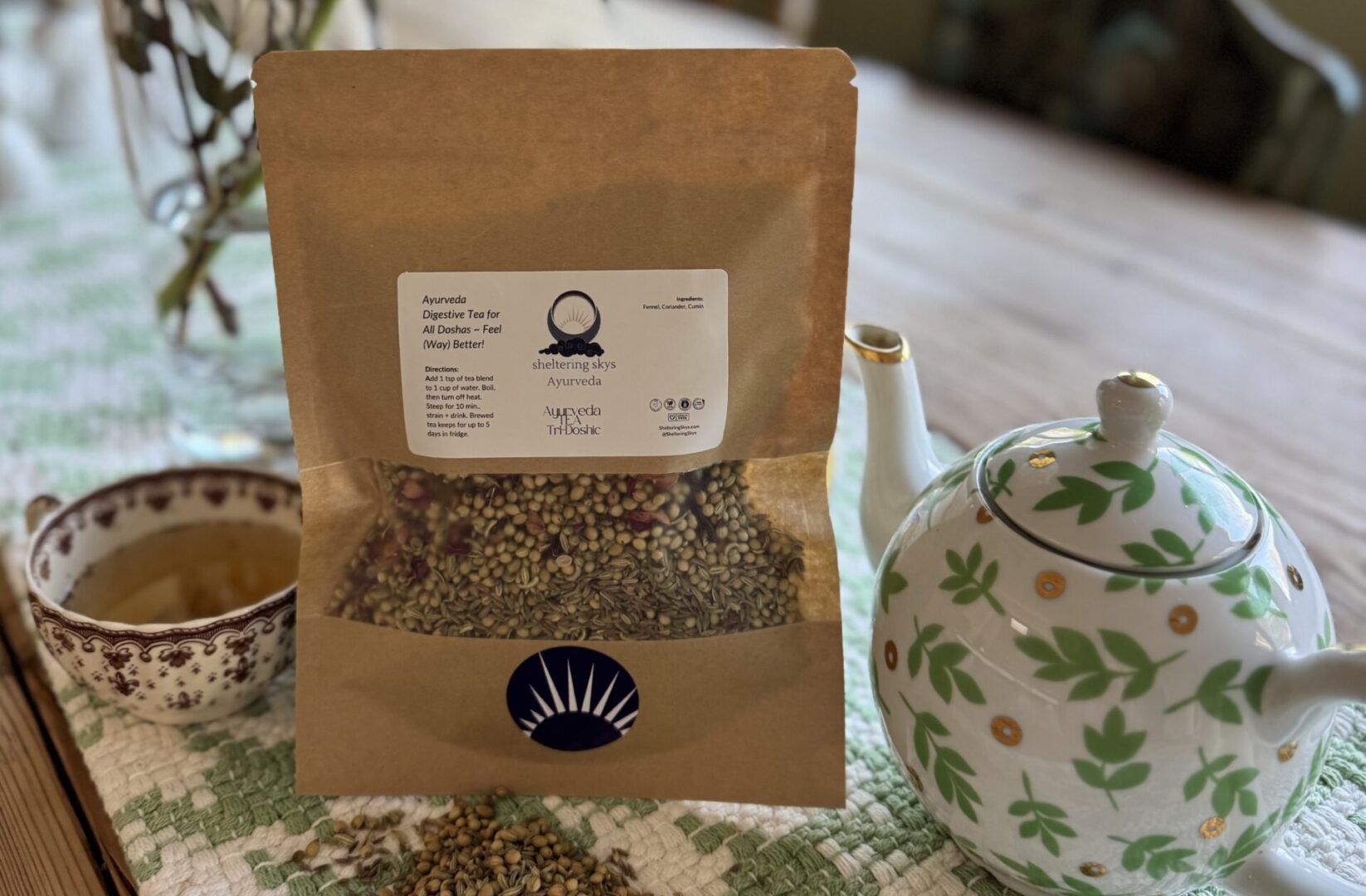
If you love the benefits of CCF tea but don’t want to measure and simmer spices every day, we created a thoughtfully sourced whole-seed blend to keep it simple.
You can learn more about our seasonal version — CCF Tea with Rose Petals, created for the heart and digestion — in our recent Valentine’s CCF Tea post.
And if you’re ready to keep a bag on hand for daily digestive support, our Ayurvedic Digestive Tea with Rose Petals (8.5 oz whole seed blend) is now available in our new Sheltering Skys Etsy shop!
Crafted with organic cumin, coriander, fennel, and a touch of rose, it’s designed to be gentle, effective, and easy to incorporate into a busy life.
Final Thoughts on CCF Tea Benefits
CCF tea is one of Ayurveda’s simplest yet most powerful tools for improving digestion. When used consistently, the benefits of CCF tea extend far beyond bloating relief—they support long-term gut balance and metabolic strength.
Strong digestion supports clear energy, steady moods, healthy elimination, and long-term resilience. And often, it doesn’t require anything complicated—just warmth, consistency, and attention.
If digestion has been holding you back from feeling your best, CCF tea is a gentle and reliable place to begin.
If you’d like guidance on how to strengthen your digestion in a way that’s tailored to your constitution and the current season, schedule a free 15-minute call.
Warmly,
Marisa
If you’d like even more Ayurvedic strategies for easing bloating and supporting digestion, check out my post: Painful Bloating After Eating? 9 Ayurveda and Science-Backed Remedies.