Yesterday I taught a three-hour session on The History of Yoga: Tracing Ancient Roots and Modern Practice for a 200-hour teacher training. It had been a while since I traced the full timeline — era by era — and reflected on how yoga evolved before becoming what most of us experience in studios today.
Public speaking is something I genuinely enjoy. There’s something alive about it. But there’s also that small, humbling edge:
Will I do this justice?
Will I say it clearly?
Will I hold it well?
I did my best.
And what struck me, as I watched the students engage, is how much of yoga we carry with us without always knowing where it came from.
Yoga Before the Mat: The Vedic Origins
Most of us meet yoga through poses. Maybe breathwork if we’re lucky.
But yoga did not begin as an exercise.
Its earliest roots live inside the Vedas — the oldest spiritual texts of India — a vast body of reflection on consciousness, ritual, sacred sound, ethics, healing, and how to live in rhythm with life itself.
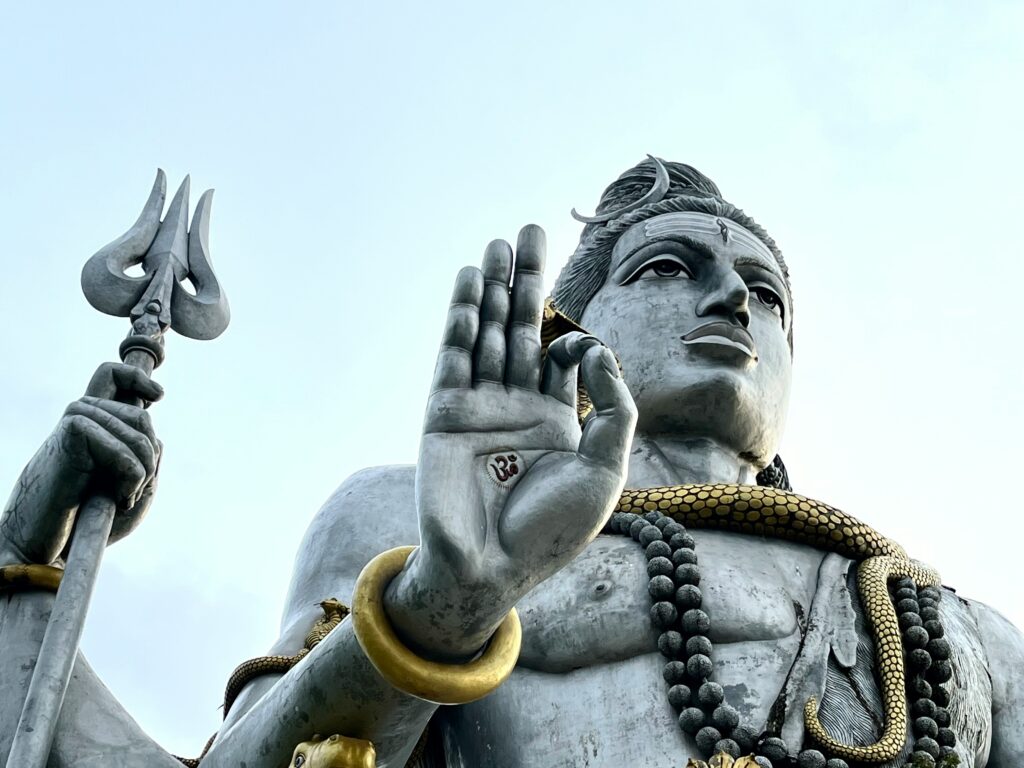
There are four Vedas — Rig, Yajur, Sama, and Atharva. Hymns. Ritual formulas. Chants. Practical wisdom for daily living.
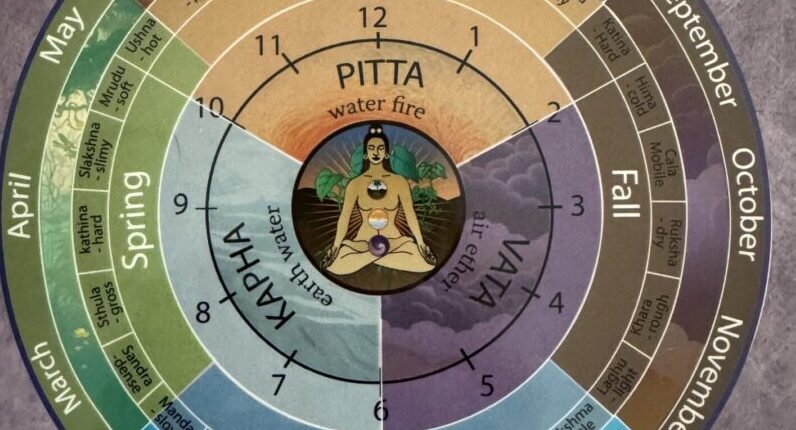
Within the Atharva Veda, we begin to see early threads of what later becomes Ayurveda — yoga’s sister science — concerned with health, longevity, digestion, and balance.
Originally, yoga was not separate from daily life. It was about how you spoke, how you ate, how you regulated your nervous system, and how you understood your place in the cosmos.
It was practice woven into living.
The Teachers Who Shaped Modern Yoga
We also watched short archival clips of the teachers who shaped the yoga many of us practice today.
There is Tirumalai Krishnamacharya (b. 1888) — often called the father of modern yoga — teaching with steadiness and precision. You can watch a 12 minute film of him here.
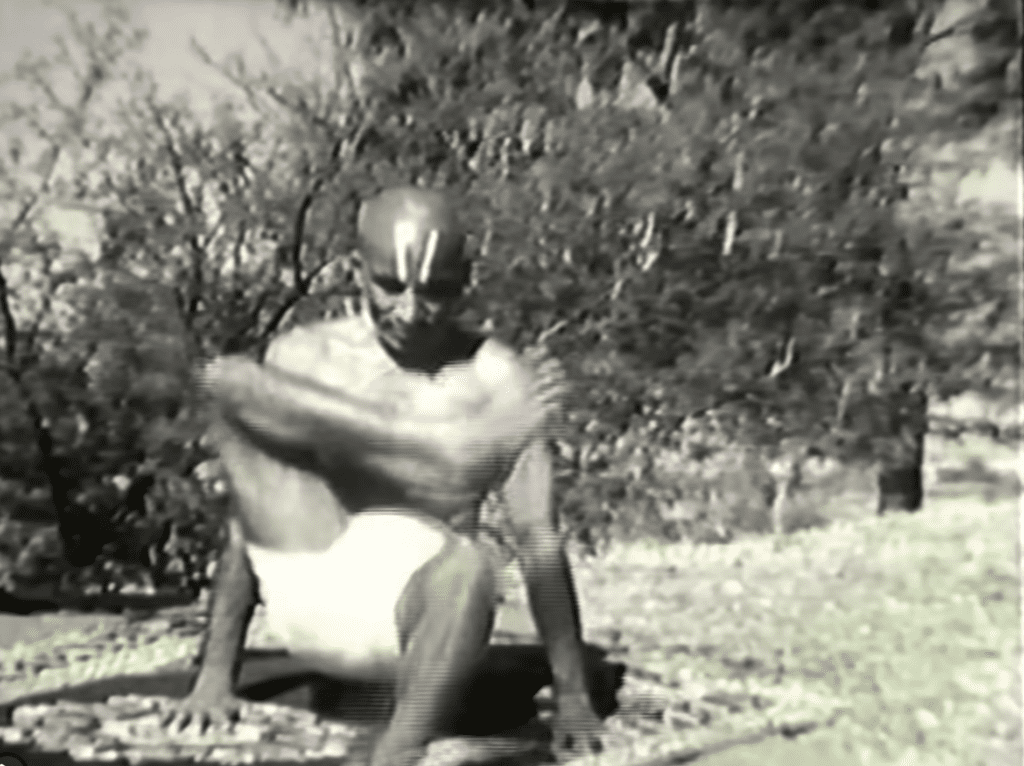
There is B. K. S. Iyengar, explaining the importance and effects of inversions and how they affect our nervous system with clarity and depth- all while a group of his students stay in headstand behind him. Watch this 5 minute clip here.
And here he is being very intense and enjoying himself while he teaches and practices with his students. Check out his intensity, this is from 1977, when he was about 59 years old.
K. Pattabhi Jois moves students through strong, rhythmic sequences that would eventually influence countless vinyasa classes. You can see him and his student, circa 1993, in motion here.
And Indra Devi, who helped introduce yoga to Hollywood — and in many ways to American women — translating and softening the practice for Western audiences. Watch her here.
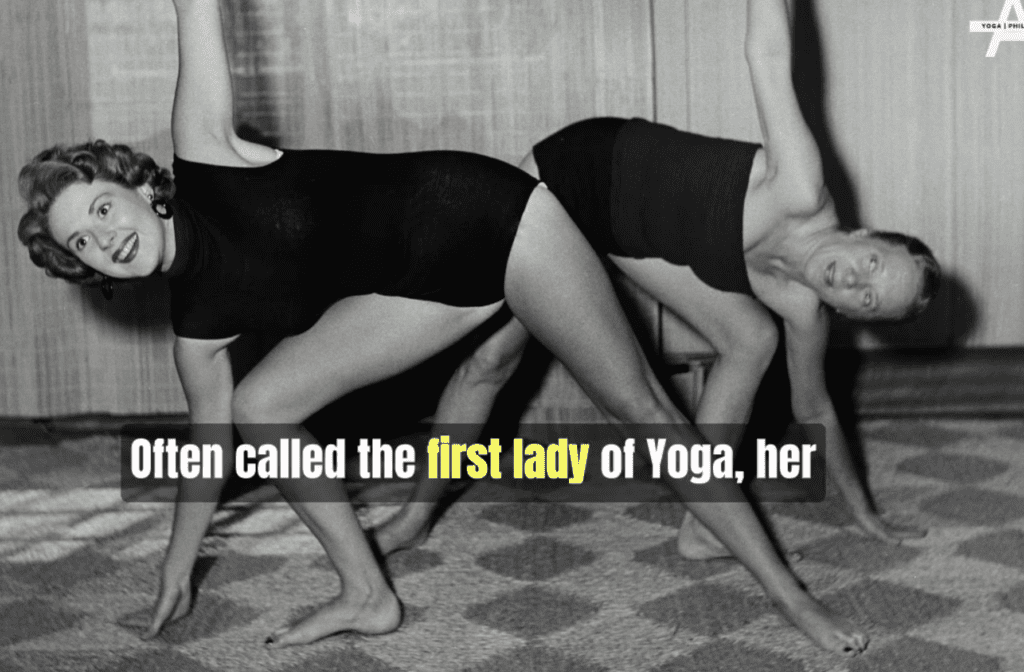
The footage is grainy. The clothing is simple. The focus is intense.
Even if you don’t recognize these names, their impact is everywhere — in flow classes, alignment-based studios, prenatal yoga, restorative formats, hot yoga, and beyond.
What we practice today did not appear out of nowhere. It was shaped. Refined. Adapted. Sometimes reimagined entirely.
Why Yoga’s Roots Matter Now
Why revisit the history of yoga now?
Because so many of us are exhausted. Dysregulated. Overstimulated. Constantly trying to optimize instead of simply live well.
The Ayurvedic lens reminds us that health is rhythmic. That digestion matters — not just of food, but of experience. That routine steadies the mind. That body and spirit were never meant to be separated.
Remembering that yoga has roots — deep ones — relieves the pressure of performance.
It brings us back to practice.
What would change if you approached your mat, your meals, or your mornings as part of a much larger conversation about how to live well?
That is the conversation I am most interested in continuing.
The history of yoga is not just academic– it’s embodied in the way we practice today.
Not dogma.
Just depth.
Not performance.
Just integrated, usable practice.
Continuing the Conversation
If this reflection on the history of yoga resonated with you, I’d love to hear what stood out.
Understanding yoga’s roots — and how they connect to digestion, rhythm, nervous system regulation, and daily life — is at the heart of how I teach and practice. The deeper I study the history of yoga, the more it reminds me that practice was always meant to support life — not compete with it.
If you’d like more personalized support, I offer complimentary 15-minute introductory Ayurvedic calls for those navigating digestion, sleep, seasonal transitions, or simply feeling out of rhythm. You can schedule one here.
I’ll continue sharing these Weekly Musings — where yoga, Ayurveda, food, and the changing seasons meet real life.
Thank you for being here.
— Marisa